0783 337 7432

hello@ovm.co.uk

Ẹdùn Ará Performances

The Ẹdùn Ará project has been putting on performances for nearly 20 years. The performances start as workshops that culminate in a costumed parade and/or stage performance, presenting a piece in honour of a particular deity common to Afrobrazilian & Afrocuban traditions. Click here to learn more about the roots of the music.

To see the full gallery of photos and some videos from each performance, click on the links below:

Past Performances

Welsh Encontro 2025

Presentation for the Orishas (Oxum, Omolu, Nana, Yemanja).
Barry Island, Glamorgan

Brazilica 2015

Presentation for Omolu/Babalu Aye.
Liverpool, Merseyside

Welsh Encontro 2015

Presentation for Omolu.
Cardiff, Glamorgan

Brazilica 2011

Presentation for Yemaya/Iemanja.
Liverpool, Merseyside

Mintfest 2010

Presentation for Omolu/Babalu Aye.
Kendal, Cumbria

We had 65 participants comprising of 10 singers15 dancers and 40 drummers. There were some regulars and many others who were taking part in our project for the first time. We also had a number of children join the drumming section making it possible for some to participate as a family.

The singers, lead by Vicky Jassey, sang a number of songs from different Afrobrazilian and Afrocuban traditions. Our performance piece began with everyone singing acapella with the lead vocals sung by all the singers and the chorus comprising of the dancers & drummers.

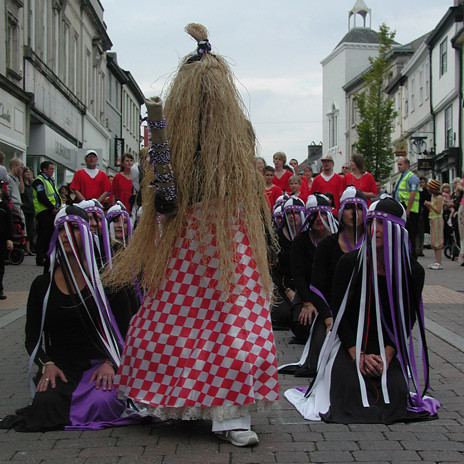
The choreography of the dancers, led by Marcia Magliari, reflects many of the main qualities and attributes associated with Omolu. The sequence begins with Omolu rising from the Earth and ends with him returning to the Earth. In between, there are dance movements that draw attention to; his role as a King, the pain he suffers from his illnesses, his warrior status and his cleansing of the air around him.

In Cuba, Babalu Aye’s colours are purple and black and in Brazil Omolu commonly wears black and white with a little red. He is also often covered in raffia. The dancers costume include all these colours and the strands that run down from the head take the place of the raffia.

The drummers, led by Raz Jayasuriya, represent Chango/Xango who, as well as having many other aspects, is the Yoruba Lord of drumming. His colours are red & white and his symbol is a double-headed axe.

Everyone worked and concentrated extremely hard all weekend and the end product was performed with a lot of grace, power and presence. Our closing performance in the beautiful setting of the Brewery Arts Centre was truly memorable.

Luton Carnival 2010

Presentation for Oya/Iansa.
Luton, Bedfordshire

Rhythms of The World 2009

A parade for Ochun/Oxum and a stage performance for Oxum, Oya & Iemanja.

Hitchin, Hertfordshire

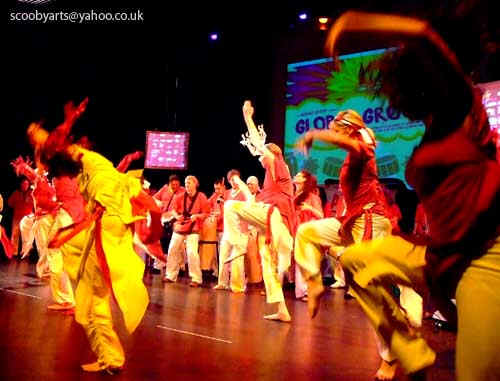
Global Grooves Showcase 2008

Presentation for Oya/Iansa.
Manchester, Greater Manchester

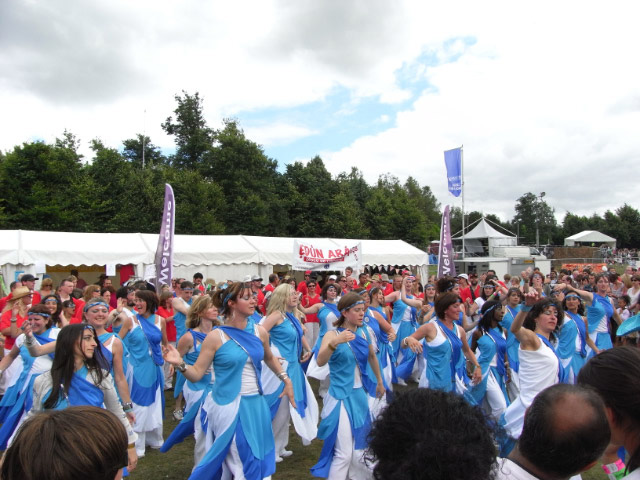
Rhythms of The World 2008

Presentation for Yemaya/Iemanja.
Hitchin, Hertfordshire

Participant numbers increased again from 2007 with 80 drummers and 46 dancers taking part this year. There were lots of regulars and lots more new people attending for the first time. A group of around 10 students formed a chorus with the singing being led by percussionist and singer Vicky Jassey.

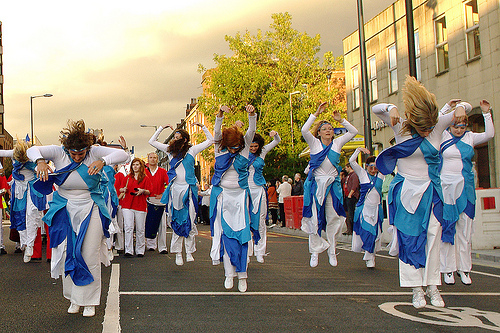
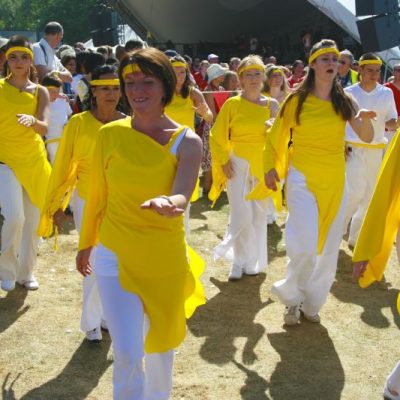
For this year’s project, the design of the dance costume reflected the flow of the sea with two shades of blue and the colour white. Yemaya wears a silver crown (she doesn’t wear gold) and this silver colour was included in the headband worn by the dancers.  Movements in the choreography represented both the calmness and the stormier aspects of the sea.

The drummers wore their customary red shirts and white trousers to represent Chango.

Everyone gave all their energy for the entire parade and the two static performances. There was quite a distance from the the leading dancers to the final drummers at the back. The bloco kept together really well and was a sight to behold.

The stage performance was spectacular with the singers on stage stood on a riser, the dancers on the stage in front of them and the drummers on the ground below.

The three levels of percussion, dance and song created a wonderful image and produced a fantastic sound.

Rhythms of The World 2007

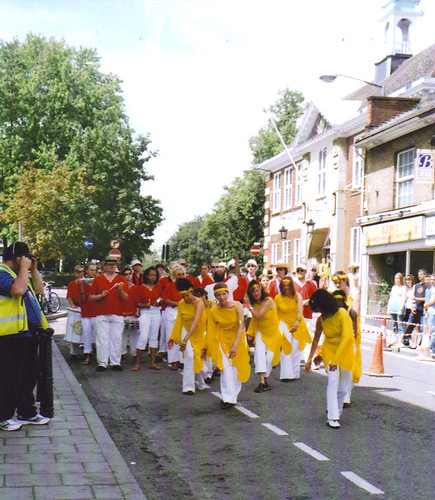
Presentation for Oya/Iansa.
Hitchin, Hertfordshire

The number of participants almost trebled from 2006. We had 60 drummers and 25 dancers taking part. There were lots of new people this year as well as many who attended last year returning for more.

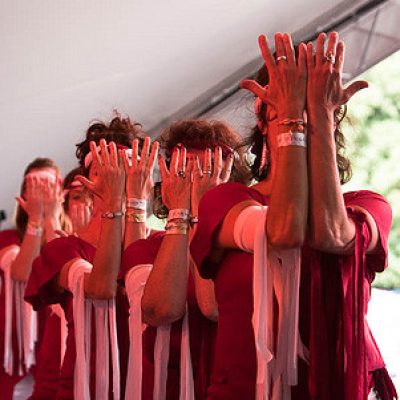
There are many colours associated with Oya but she is often represented by one of them a maroon/wine red which was the main colour for the dance costume this year. The choreography itself represented three of Oya’s well known aspects wind, lightning and warrior. The design of the dance costume reflected the flow of the wind combined with sharply cut edges that represented lightning. 

The drummers wore red shirts and white trousers. This red and white combination represent Chango/Xango, the Yoruba God of Thunder and Lord of Drums.

We also added songs from the Afrobrazilian tradition of Candomblé & the Afrocuban tradition of Santeria.

Everyone gave all their energy for the entire parade and the two static performances. As the bloco was winding along the streets of Hitchin town center, crowds gathered to cheer and marvel at the spectacle.

Rhythms of The World 2006

Presentation for Ochun/Oxum.
Hitchin, Hertfordshire

The parade lasted about two hours and there were lots of smiles all round from the observing public, ROTW representatives, as well as from all those parading. The parade route went right round the centre of Hitchin so thousands of people were able to see the spectacle.

The vibrant and solid beats from the drummers moved the dancers graciously forwards defying the heat and together we produced a wonderful energy.

We definitely brought the contagious energy of the Brazilian Carnival to the Rhythms of the World festival: music, dance, colour, all together as ONE.